
If It Doesn’t Move, It Doesn’t Matter: What SXSW Revealed About Talent, AI, and What Actually Drives Impact
You can learn more about where hiring is going from 3 days at SXSW than 3 months on LinkedIn.


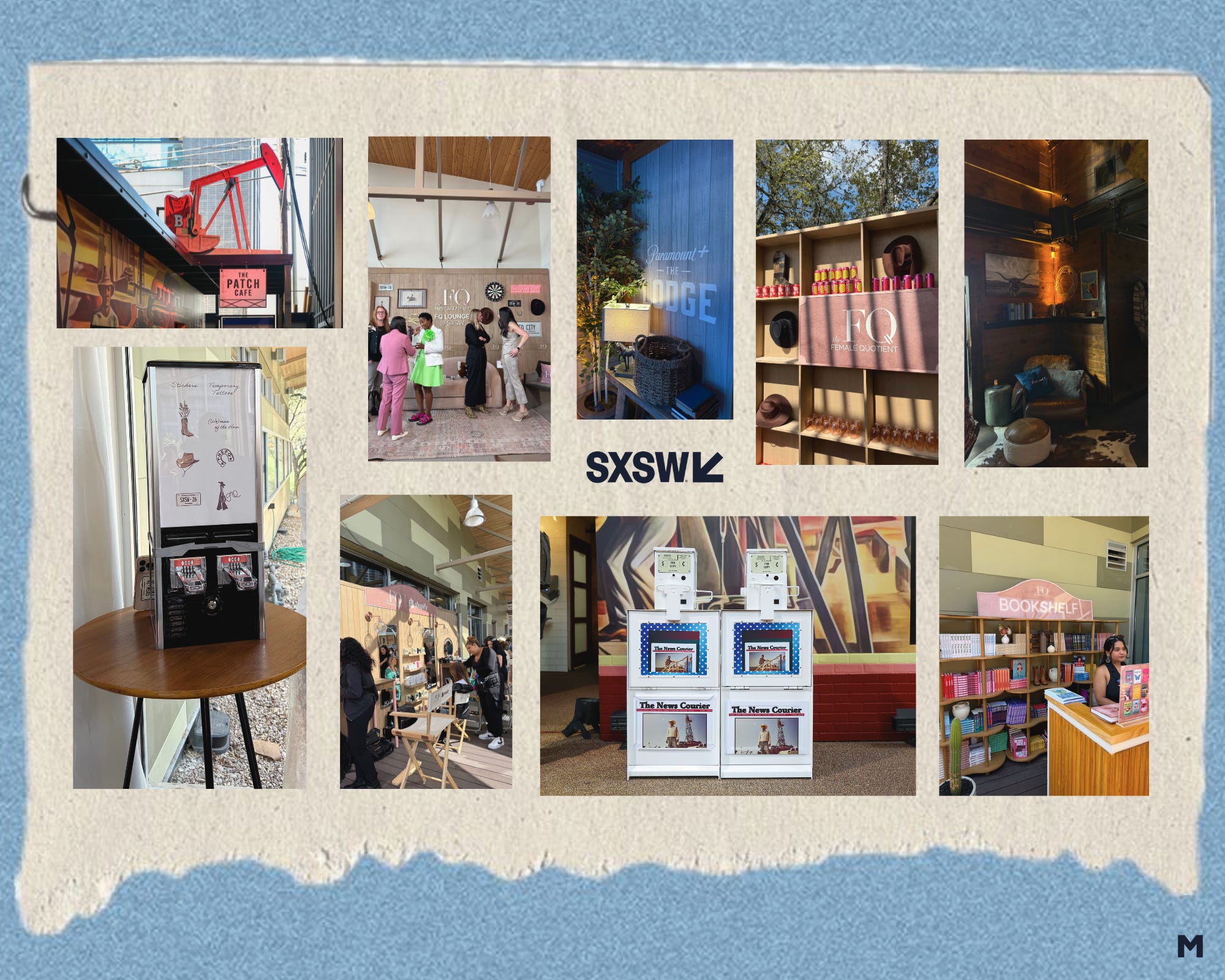
It’s Maddie here, Monday Talent’s Operations & Marketing Lead! I attended SXSW expecting to dive into discussions on AI, creator marketing, and the future of branding. And sure enough, those topics were all there. But what really stayed with me wasn’t a headline or trend; it was the people driving them.
The way they think. The way they build. The way they move seamlessly between strategy, execution, and storytelling. And it clicked quickly: the most valuable person in the room isn’t just strategic or creative anymore. They’re both.
Why Storytelling Is No Longer Surface-Level
If you know me, you know that The Female Quotient lounge was exactly where I wanted to be: thought-provoking programming, strong points of view, and conversations that actually go somewhere. With partners like Shopify and poppi, it felt like a real intersection of culture, commerce, and community.
But more than the setting, it was the people and the conversations that took place inside. One panel on the business of storytelling brought together voices from across media, brand, and tech (The Washington Post, Tecovas, Moët Hennessy, NBCUniversal, Yahoo).
Different industries. Different perspectives. But one shared reality: storytelling is no longer just a function; it’s a business model.
There was a moment during this conversation that stuck with me: storytelling isn’t just about the front-end anymore. It’s embedded in the backend too. Krista Dalton from Tecovas described it as treating marketing strategy with the same care as a handcrafted product - “as handmade as our boots themselves.”
That shift is everything. The brands (and people) winning right now aren’t just telling better stories; they’re building systems that allow those stories to scale, adapt, personalize, and perform.
At NBCUniversal, for example, AI is being used to create over 6 billion content variations, enabling a true 1:1 experience with personalities like Andy Cohen guiding tone and interactions. At Yahoo, they’re activating AI Scout influencers like Jenna Palek, whose workout-driven content is not only engaging but behavior-shaping.
Across the board, there’s been a dramatic increase in partner and influencer deals tied directly to AI and content creation. This isn’t experimentation anymore. It’s infrastructure.
Building Beyond the Room
Beyond the panels, it was the experiences at SXSW that reinforced this shift. A quick but meaningful moment at the Paramount+ Lodge reminded me of how much intention goes into building environments where brand, talent, and audience can actually connect—not just show up, but engage.
The best activations weren’t just immersive; they were strategic. They were designed with distribution in mind, built to travel beyond the room, and created to turn moments into something that lasts longer than the event itself.
Speed vs. Substance
If there was one consistent theme across every conversation at SXSW, it was this tension: AI is accelerating the pace, but the work still needs to feel human.
The strongest examples weren’t fully automated; they were guided. AI shaped content through real personalities, deepened storytelling instead of diluting it, and built systems that scale without losing intention.
At the end of the day, people still connect with people. That hasn’t changed, only how fast and how far that connection can travel.
What This Means for Hiring
All of this points to a shift in who’s actually driving the work forward.
The most valuable talent today can build, distribute, and understand performance; not in theory, but in practice.
SXSW made one thing clear: the evolution of the marketing org chart has already happened. Influencer is now tied to revenue, growth and brand are intertwined, and comms now requires fluency in product, data, and AI.
But the biggest gap? The people who excel in this environment don’t fit the job descriptions companies are still writing.
The ones standing out are cross-functional, hands-on, and deeply understand distribution, not just how to create something, but how to make it move.
 | A guest post by
|